
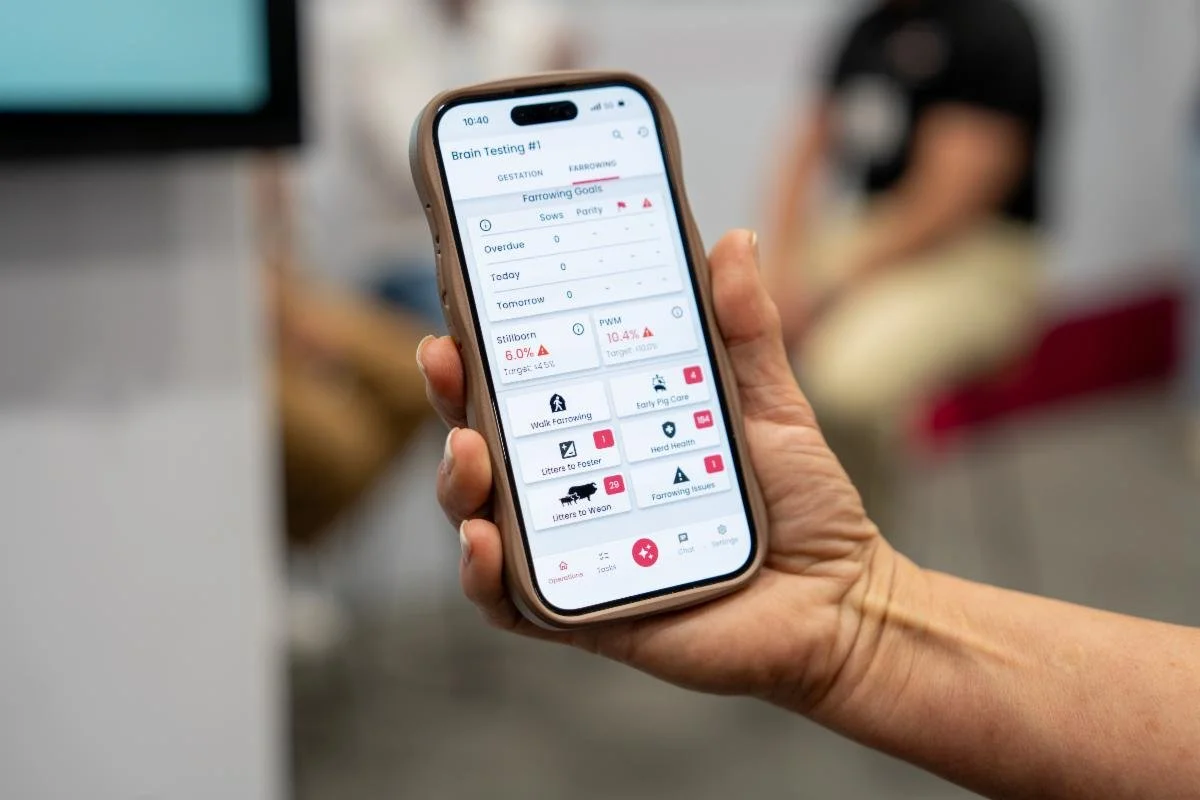
While taking in all the innovative technology and equipment offered at this year's World Pork Expo, college student Rachel Swinford was most impressed by a new Artificial Intelligence chat bot designed to help manage swine health.
Story by Oklahoma Pork Summer Intern Rachel Swinford
What a way to complete the first week of my internship at World Pork Expo! The food, fun, and travel laughs could easily sum up some of my favorite parts of the experience. However, as I reflect on the trip, what stands out most is the opportunity to meet so many incredible people. Everyone we encountered was genuinely interested in our involvement as young professionals and never failed to tell Halle, my fellow intern, and me, “Let us know how we can help in your future careers.”
While the people and the food were top-notch, what continues to amaze me is the technology that evolves year after year. Just when you think the pork industry cannot become more innovative, the WPX trade show proves otherwise. I had the opportunity to attend a tech tour showcasing many exciting advancements that should inspire the current and next generation of pork producers. From cameras that can detect head counts to geneticists exploring ways to limit disease through gene editing, the future of the industry is incredibly dynamic. However, one innovation stood out to me the most: Charlotte AI, developed by SwineTech.
I understand that using artificial intelligence (AI) in swine production may be considered a “hot take,” but hearing about the advantages of Charlotte AI were truly captivating. Charlotte allows producers to tailor data specifically to their operation, meaning her responses align directly with each farm’s unique protocols and management guidelines.
Additionally, one of Charlotte’s most noticeable features is her ability to improve both animal welfare and operational communication. By analyzing real-time data, she can help identify potential health concerns earlier, allowing for quicker and more informed decision-making. This reduces the communication lag that can sometimes occur between farm workers and managers when addressing medical recommendations or treatment plans. I had the opportunity to speak with Stacey Voight, a SwineTech employee, and asked her, “If you could describe Charlotte in one sentence, what would it be?” Her response was, “To elevate all employees to the same knowledge level and provide access to manager level information, allowing them to get answers quickly.”
I believe Stacey’s statement effectively captures the potential positive impact that Charlotte AI could have on a farm!